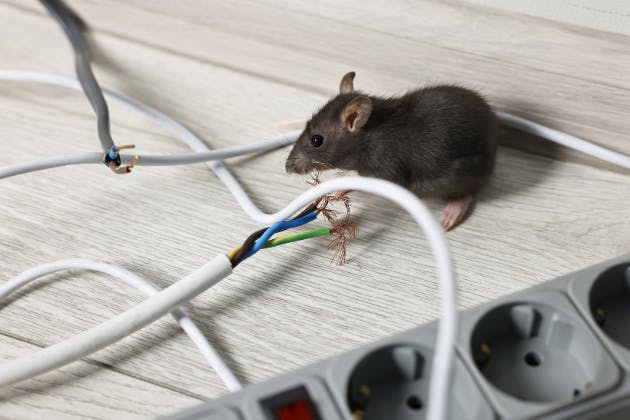
The Hidden Fire Hazard: Why Mice Chewing Wires is a Serious Threat to Your Home
When you think of a mouse in the house, you probably think of a nuisance—stolen crackers, messy droppings, or that annoying scratching in the walls at 2:00 AM. But there is a much more dangerous reality hiding behind your drywall. In the United States, rodents are estimated to be responsible for up to 20% to 25% of house fires with "undetermined" causes.
In a city like Boston, where historic homes and older wiring are common, a small rodent problem can quickly turn into a catastrophic fire hazard. At Beantown Pest Control, we believe that understanding why this happens is the first step in protecting your property.
The Wild Reality: Why Rodent Teeth Never Stop Growing
It sounds like something out of a horror movie, but it’s a biological fact: a mouse’s front teeth (incisors) never stop growing. In fact, they can grow up to 5 inches per year. Because their teeth grow so fast, mice have an evolutionary "gnaw or die" instinct. If they don't constantly chew on hard materials to file those teeth down, the teeth will eventually grow so long that the mouse can no longer eat. This is why they don't just chew for fun—they chew for survival.
Why Your Electrical Wires are the Primary Target
To a mouse, the plastic insulation around your electrical wiring is the perfect chew toy. It has the right texture and resistance to file down their teeth effectively. When a mouse gnaws through that insulation, it leaves the copper wire exposed. This leads to:
- Arcing and Short Circuits: Exposed wires can spark, especially when they come into contact with wooden studs or attic insulation.
- Flammable Nesting: Mice often build their nests out of shredded paper, dried grass, and lint right next to these electrical junctions. One spark is all it takes to ignite the nest.
- Hidden Dangers: Because this chewing happens inside walls or crawl spaces, you won’t see the damage until the lights flicker or, worse, smoke appears.
Beyond the Wires: The Risk of PEX and Pheromones
The danger doesn't stop with your electrical system; modern plumbing is also at risk. Many homes in the Greater Boston area have been updated with PEX (flexible plastic) piping, which mice can puncture in seconds, leading to devastating hidden floods inside your walls. Furthermore, as rodents travel through these wall voids, they leave behind a trail of urine and pheromones. These chemical markers act as a GPS for other rodents in the neighborhood, signaling that your home is a safe and accessible shelter. This means that even if you trap one mouse, the scent trail is already calling out to others to take its place.
Protect Your Greater Boston Home
If you’ve seen droppings or heard scurrying, the clock is already ticking. Don't wait for a flicker in your lights to take action. At Beantown Pest Control, we specialize in identifying rodent entry points and removing the threat before it compromises your home's safety.
📞
Call Beantown Pest Control today at 781-443-3869 or visit www.beantownpest.com to schedule a safety-focused rodent inspection.