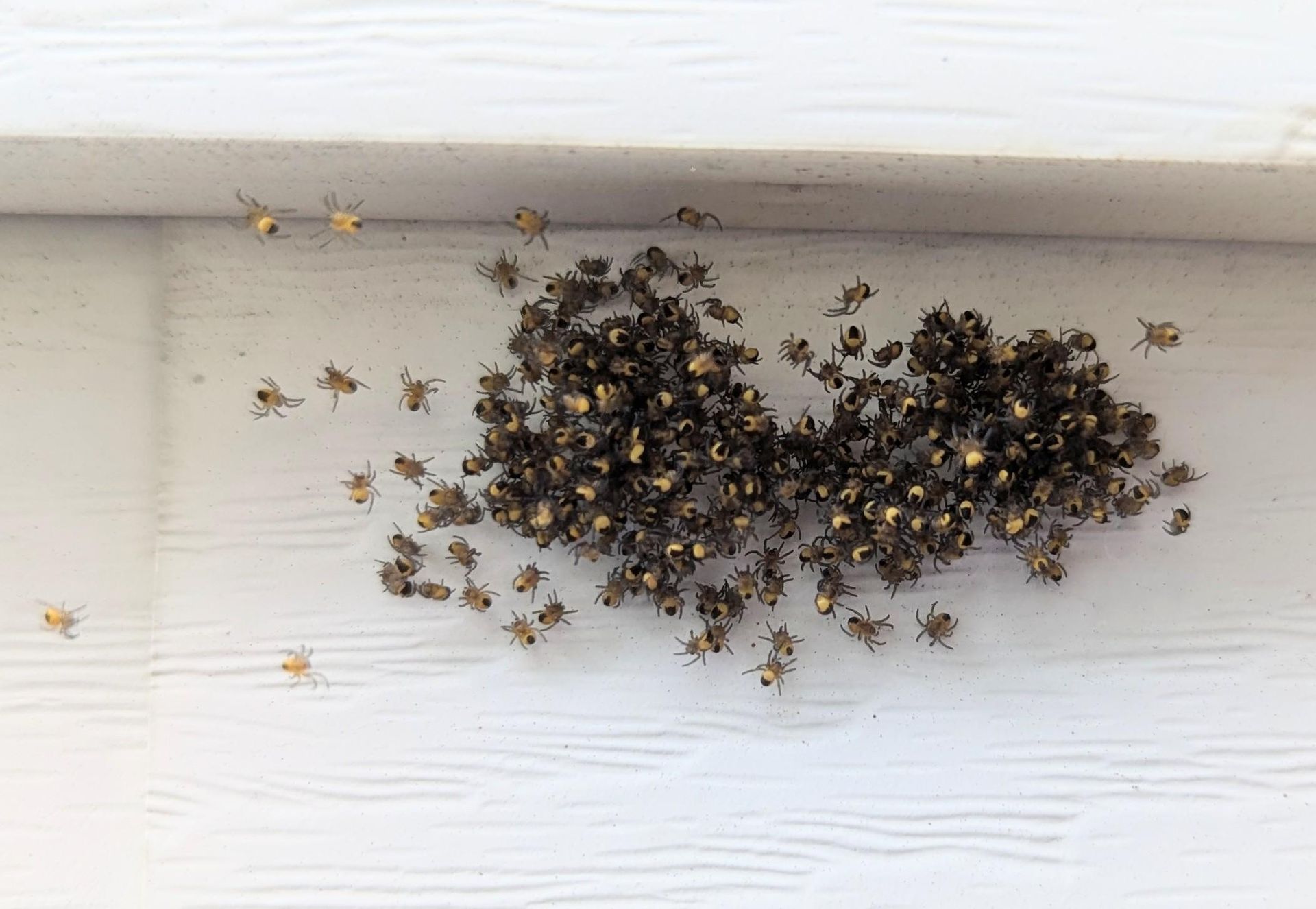
Spiders: The "Good" Roommate That Signals a Big Problem
We get it—nobody likes walking into a spiderweb in the basement. However, spiders are often called nature’s pest control for a reason. They are elite predators that spend their lives hunting the bugs you really don't want, like flies, moths, mosquitoes, and even cockroaches. In that sense, a spider is technically a “good" roommate. But from a professional perspective, seeing a sudden surge of spiders in your Boston home is a major red flag.
Spiders Go Where the Food Is
Spiders don't move into your home because they like your decor; they move in because there is a buffet waiting for them. Spiders are opportunistic feeders, meaning they set up shop where the prey is most active. If you are seeing an unusual number of spiders in your home this season, it’s a direct indicator that you have a high population of other insects living in your walls, attic, or basement. You might not see the ants, silverfish, or beetles yet, but the spiders certainly do.
The "Red Flag" Warning Signs
While it’s nice that the spiders are eating some of your unwanted guests, their presence means your home has become an ecosystem for pests. Seeing a lot of spiders usually points to a few underlying issues:
- A Secondary Infestation: You likely have a thriving population of smaller insects that are providing the spiders with a steady food supply.
- Moisture Issues: Many of the bugs spiders eat are attracted to dampness. A spider-heavy basement often points to hidden moisture or humidity problems.
- Entry Points: If spiders are getting in easily, so are the more destructive pests like carpenter ants or rodents.
Understanding the Indoor Ecosystem
When spiders settle into a New England home, they choose their hunting grounds based on the specific behavior of their prey. For instance, if you find many webs near floorboards or in damp corners of the basement, it often points to a ground-level invasion of silverfish or sowbugs. If spiders are clustering near window frames or light fixtures, they are likely feeding on fungus gnats or flies that are entering through damaged screens or gaps in the molding. By observing where the spiders are most active, our technicians can actually work backward to identify the primary insect infestation. It’s not just about the spiders; it's about the entire food chain that has established itself inside your structure.
Why Professional Treatment is Necessary
Brushing away a web or squashing a spider only treats the symptom. To truly clear your home, you have to eliminate the food source. At Beantown Pest Control, our approach is to look at the big picture. We don't just clear out the spiders; we identify and eliminate the insect populations they are feeding on. By sealing entry points and treating the root cause, we ensure that neither the spiders nor their buffet come back.
📞
Call Beantown Pest Control today at 781-443-3869 or visit www.beantownpest.com to get your home back to being a pest-free sanctuary.